Are you looking at your Sunnyvale or Mountain View property and wondering whether an ADU could add flexibility, value, or future options? You are not alone. In both cities, accessory dwelling units are more than a trend. They are a practical way to create space for family, guests, or long-term rental use while working within California’s ADU rules. If you want to understand what is possible, what may trigger a more involved review, and what to watch for before you build, this guide will walk you through it. Let’s dive in.
Why ADUs matter here
In Sunnyvale and Mountain View, the big question is usually not whether an ADU is allowed. It is how local rules affect the size, permit path, setbacks, parking, and rental use of the unit you want to build.
California law gives homeowners an important baseline. Local agencies cannot use standards like minimum lot size, lot coverage, floor area ratio, open space, or front setback rules to block at least one 800-square-foot ADU with 4-foot side and rear setbacks. In most cases, owner occupancy also cannot be required for ADUs, though JADUs can be treated differently when they share sanitation with the main home.
What counts as an ADU
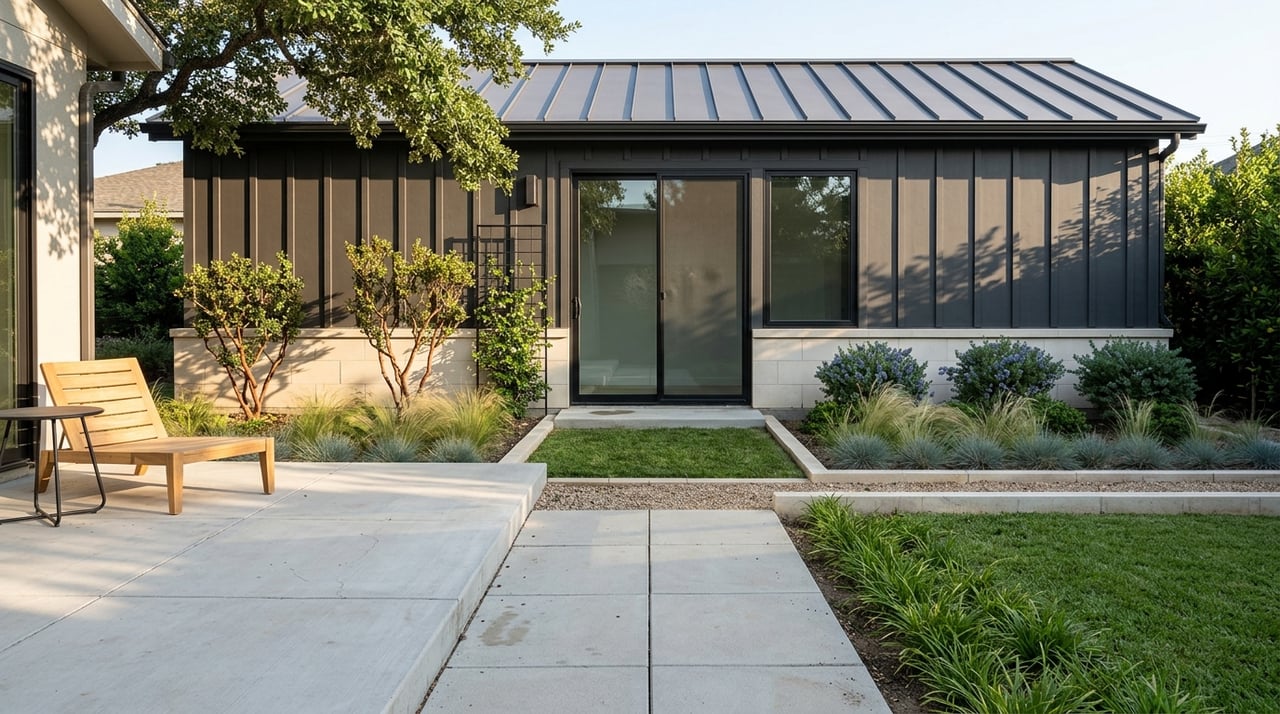
An ADU is a secondary residential unit on the same lot as a primary home or residential building. Depending on the property and the city, it may be detached, attached, or created by converting existing space such as a garage or basement.
A JADU, or junior accessory dwelling unit, is smaller and must be created within a single-family home. JADUs come with their own rules, including size limits, a separate entrance requirement, and a recorded deed restriction in both cities.
Sunnyvale ADU options
Sunnyvale gives homeowners several ways to add living space, especially on single-family lots. The city generally allows one new-construction ADU, one conversion ADU, and one JADU on a single-family property, which means some lots may support up to three ADU types.
On multifamily properties, Sunnyvale also allows expansion. Existing multifamily sites may add up to 8 detached ADUs, as long as that number does not exceed the number of existing units. Conversion ADUs within existing multifamily buildings can reach 25 percent of the existing units.
Sunnyvale permit path
Sunnyvale has a clear split between streamlined and non-streamlined review. Many ADU projects can move forward with a building permit only, including new-construction ADUs up to 800 square feet on single-family lots, all multifamily new-construction ADUs, conversions, JADUs, and basement-only ADUs.
If you want to build a new single-family ADU larger than 800 square feet, the process becomes more involved. That type of project requires a Miscellaneous Plan Permit before the building permit. Sunnyvale’s toolkit shows a 1,000-square-foot maximum for single-family ADUs, so larger units are possible, but they require more review.
Sunnyvale size and setback rules
For new construction, Sunnyvale uses 4-foot side and rear setbacks. Once a single-family ADU goes above 800 square feet, front and reducible-front setback rules come into play, and the project must also maintain 5 feet of separation from the main building and accessory structures.
Sunnyvale also treats floor area and lot coverage differently depending on size. Up to 800 square feet of ADU area is exempt from lot coverage and floor-area-ratio calculations. Any area above 800 square feet counts toward those standards.
Height limits vary by type. Detached ADUs are generally capped at 16 feet, with 18 feet allowed near major transit or on multistory multifamily lots, plus a 2-foot roof-pitch allowance. Attached ADUs can reach 25 feet.
Sunnyvale rental and fee considerations
Sunnyvale allows ADUs to be rented, but ADUs approved on or after January 1, 2020 cannot be used as short-term rentals. Most ADUs do not require owner occupancy. JADUs that share sanitation with the main home are the main exception and may require owner occupancy along with a recorded deed restriction.
If you are budgeting, two thresholds matter. New residential square footage over 500 square feet may trigger a school impact fee, and ADUs over 750 square feet may trigger a transportation impact fee. Sunnyvale also offers preapproved plans and an ADU calculator, which can help simplify design decisions and early cost planning.
Mountain View ADU options
Mountain View also works within California’s statewide ADU framework, but its local process feels more straightforward. ADUs and JADUs do not require a Planning permit. The city says they only need a building permit.
For single-family lots, Mountain View states there is no minimum lot area. The maximum ADU size is 850 square feet for studios and one-bedroom units, and 1,000 square feet for units with two or more bedrooms.
Mountain View setbacks, height, and parking
Mountain View requires 4-foot side and rear setbacks and allows a height limit of up to 28 feet. That height allowance may create more design flexibility than some homeowners expect, especially if you are trying to fit an ADU into a constrained site.
Parking is one of the key local details to review early. In Mountain View, one-bedroom-or-more ADUs need one parking space unless an exception applies. Zero-bedroom units do not need parking.
Mountain View JADU and multifamily rules
Mountain View caps JADUs at 500 square feet, and they must be located inside the single-family home. They also need a separate entrance and a recorded deed restriction. If the JADU shares sanitation with the main home, owner occupancy is required.
For multifamily sites, Mountain View offers meaningful capacity. Existing multifamily buildings can add at least one ADU and up to 25 percent of existing units in non-livable space. A lot with an existing multifamily building can also add up to 8 detached ADUs, as long as that number does not exceed the number of existing units. If the multifamily building is proposed rather than existing, up to 2 detached ADUs may be allowed.
Mountain View timing, fees, and rental use
Mountain View estimates a permit timeline of roughly 4 to 6 months. Typical permit fees are about $7,000 to $13,000 for new-construction ADUs, $3,000 to $5,000 for conversions, and $4,000 to $6,000 for JADUs, before excavation or school fees.
School impact fees may apply when new residential square footage exceeds 500 square feet. For rental use, Mountain View notes that ADUs can house family members, friends, colleagues, or other renters and can supplement property income.
Short-term rentals are regulated more closely than many homeowners realize. In Mountain View, an ADU rented for 30 days or fewer is considered a short-term rental. All short-term rentals must register and pay a 10 percent transient occupancy tax, hosted rentals have no annual cap if the operator is present, and unhosted rentals are capped at 60 days per year.
Which properties are strongest candidates
In practical terms, the easiest ADU candidates often have a deep rear yard, a usable side yard, or existing space that can be converted. Garages, basements, and other enclosed areas may offer a simpler path because both cities allow conversion ADUs and both require independent exterior entrances.
The best fit also depends on your goals. If you want to keep the process more streamlined in Sunnyvale, staying at or under 800 square feet may reduce complexity. In Mountain View, the review path is simpler overall, but parking and fee thresholds still deserve close attention.
How to think about return on investment
The safest way to evaluate an ADU is through long-term flexibility, not just immediate rent. A well-planned unit can serve as private space for family, a guest suite, housing for an aging parent, or a legally permitted long-term rental.
That approach is especially important here. Sunnyvale largely prohibits short-term rental use for newer ADUs, and Mountain View regulates short-term rentals with registration, tax, and day-limit rules. For many homeowners, the real value is optionality, added function, and a property that can adapt as life changes.
Design choices can shape outcomes
If you are considering an ADU as part of a broader property strategy, design matters. A thoughtful layout, a clear circulation plan, and the right size can help the unit feel intentional rather than squeezed into the lot.
This is where a property-level strategy becomes helpful. Some homeowners benefit from a detached backyard cottage. Others may get better results from converting an existing garage or creating a smaller, more efficient unit that avoids extra review or fees.
What to review before you build
Before moving forward, it helps to pressure-test the basics of your lot and your goals. Start with these questions:
- Do you want space for family, guests, or a long-term renter?
- Is your lot better suited for new construction or a conversion?
- In Sunnyvale, do you want to stay at or under 800 square feet for a simpler path?
- In Mountain View, will your layout trigger a parking requirement?
- Will your square footage cross the 500-square-foot school fee threshold?
- Are you considering a JADU, and if so, will shared sanitation affect owner-occupancy rules?
- Would a preapproved plan help you move more confidently through early design?
Answering these questions early can save time, reduce redesigns, and help you build around your real priorities.
A smart ADU starts with a clear plan
ADUs can make a Sunnyvale or Mountain View property more useful, more flexible, and better aligned with how you want to live. But the strongest outcome usually comes from matching the unit type, size, and design to the site and to your long-term goals.
If you are weighing whether an ADU could improve your property’s value, function, or future sale appeal, working with someone who understands both local housing patterns and design strategy can make the decision much clearer. To talk through your options and how an ADU may fit into your broader real estate plans, connect with Fabiane Maluchnik.
FAQs
What are the main ADU differences between Sunnyvale and Mountain View?
- Sunnyvale has a stronger split between streamlined and non-streamlined review, especially for new single-family ADUs over 800 square feet. Mountain View uses a simpler building-permit-only path for ADUs and JADUs, but parking and short-term rental rules are important local factors.
Can you build an 800-square-foot ADU in Sunnyvale or Mountain View?
- Yes. California law protects at least one 800-square-foot ADU with 4-foot side and rear setbacks, and both cities operate within that framework.
Do Sunnyvale ADUs require owner occupancy?
- In most cases, no. The main exception is certain JADUs that share sanitation with the primary dwelling, which may require owner occupancy and a recorded deed restriction.
Do Mountain View ADUs require parking?
- Zero-bedroom ADUs do not require parking. ADUs with one bedroom or more need one parking space unless an exception applies.
Can you use an ADU as a short-term rental in Sunnyvale or Mountain View?
- Sunnyvale says ADUs approved on or after January 1, 2020 may not be used as short-term rentals. Mountain View allows short-term rentals under city rules, including registration, transient occupancy tax, and limits on unhosted rental days.
What fees should you expect for an ADU in Sunnyvale or Mountain View?
- In both cities, new residential square footage over 500 square feet may trigger school impact fees. Sunnyvale also flags a transportation impact fee for ADUs over 750 square feet, while Mountain View provides estimated permit-fee ranges based on whether the project is new construction, a conversion, or a JADU.