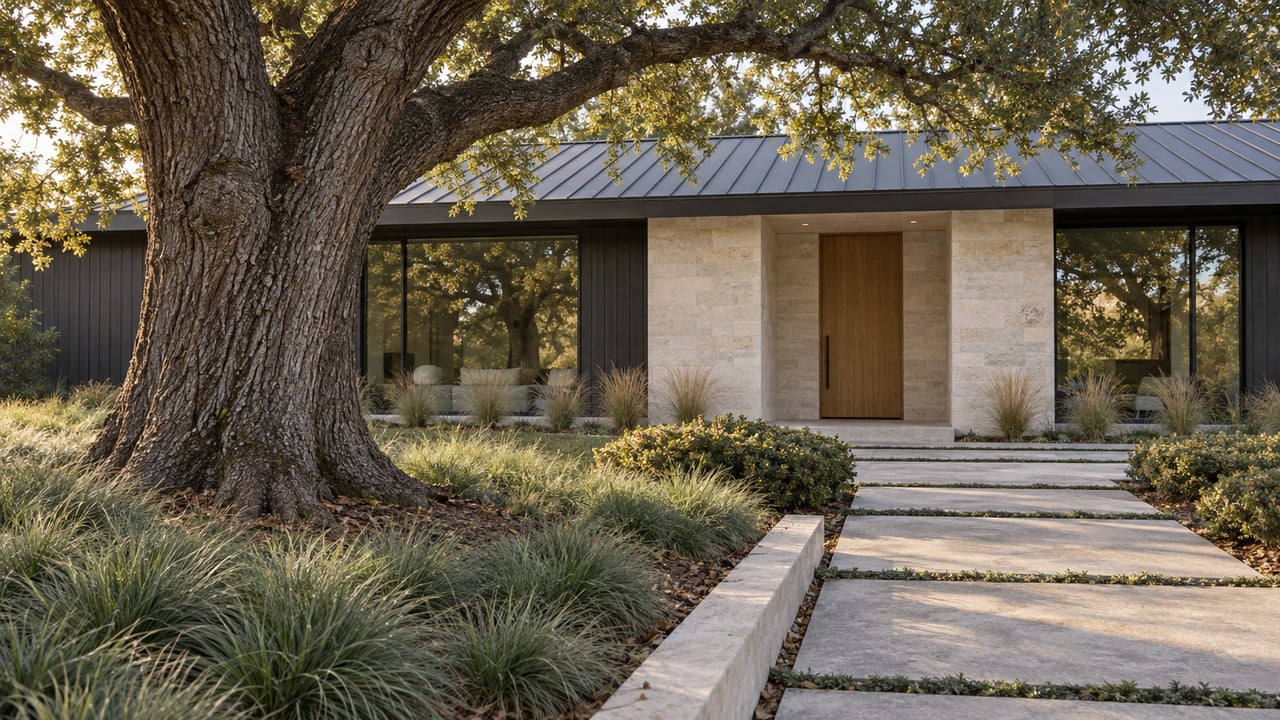
A buyer who writes an offer on a 1950s or 1960s ranch in Los Altos with rebuild plans is usually pricing the wrong sequence. They picture demolition, then foundation, then framing, timed against a construction loan and maybe a move-in date before the next school year starts. What they aren't pricing in is the backyard. In 2024, the City of Los Altos rewrote its Tree Protection Ordinance, and the rewrite added a permitting step, one that can add months to a schedule most buyers assumed was purely a design and construction problem.
What the 2024 Rewrite Actually Changed
According to Urban Forestry Guide, before the update, a tree needed a trunk 15 inches in diameter, measured 48 inches above natural grade, before its removal required a permit. The rewrite lowered that threshold to 12 inches for most species and to 10 inches for native trees such as oaks and California buckeyes. The city's own staff report on the update noted that natives were held to the lower threshold because they require less maintenance and support local wildlife more directly than ornamental species.
That drop sounds small until you walk a typical Los Altos lot that's been planted and maintained for four or five decades. Trees that were saplings when a family bought the house in the 1970s have long since crossed both thresholds. None of that planting ever touched a permit application under the old rule.
The city also revisited what it charges for the paperwork. The same staff report found that Los Altos's tree removal fee ran well below what neighboring cities charged, and staff recommended raising it. Today the numbers look like this:
| Item | Current Cost |
|---|---|
| Standard tree removal permit | $300 per tree |
| In-lieu fee, no replacement planting | $1,200 |
| Unauthorized removal, standard tree | $5,000 or more per tree |
| Unauthorized removal, heritage tree | Full appraised value |
None of this is a subtle line item. It's a cost category that either didn't exist or existed at a fraction of this scale before the rewrite.
The Sequence Runs Ahead of the Building Department, Not Inside It
The city targets 30 days to process a complete tree removal application. Heritage tree removals carry an additional 10-day public notice period before the permit becomes final. None of that overlaps neatly with a demolition and abatement sequence a general contractor is used to running back to back. It runs in parallel at best, and it can gate the start of grading outright if a tree the framing plan assumed would come out turns out to need mitigation or a redesign of the footprint to preserve a root zone.
A buyer treating "close, demo, build" as one continuous line is going to be surprised by how many separate approvals sit inside that first word. A seller marketing a property on its teardown value owes a buyer, and honestly owes their own pricing, a clear look at what's actually standing on the lot before either side treats the existing structure as worthless and the land as a blank slate.
Los Altos SB9 Applications
SB9 is the state law allowing certain single-family lots to be split into two under specific conditions.
A staff report presented to the Los Altos City Council in mid-2024 noted that 18 SB9 applications had been submitted to the city at that point, and only 9 of those requested an actual urban lot split rather than a two-unit development on a single lot. That ratio has likely shifted since, but it's a useful signal that most owners pursuing SB9 in Los Altos aren't dividing their parcel so much as adding a second unit to the one they already have.
What This Explains About Los Altos's Confusing Price Data Right Now
If you've compared Los Altos price reports recently, you may have noticed they don't agree. One widely tracked national home-sales index put the three-month median sale price at $4.2 million for the period ending in May 2026, down 13.8 percent from the same window a year earlier. Over that same three months, price per square foot on that index actually rose 3.6 percent year over year.
Read on its own, that looks like a contradiction: a falling median sitting next to a rising per-square-foot figure. It stops looking contradictory once you account for what's actually closing. Los Altos's current sales mix includes finished, newly built homes on rebuilt lots right alongside dated structures selling mostly for the land underneath them. Those are two different products wearing the same zip code. A three-month window with more land-value closings pulls the median sale price down, because the closing includes a smaller, older structure that isn't worth much on its own. A window with more finished rebuilds closing pulls the median up and pushes the per-square-foot figure with it, since a newly built home commands a far higher price for the same footprint.
First-half 2026 sales figures for the area point the same way on the finished-rebuild side of that story. North Los Altos's average price per square foot reached $2,183 in the first half of 2026, a record for the area and up 6 percent from the same period in 2025, the first time any part of the city has averaged above $2,000 per square foot. In that same half, 81 percent of North Los Altos sales closed at or above list price. City-wide, 146 single-family homes sold through the local MLS in the first half of 2026, up from 140 in the first half of 2025 and 123 in the first half of 2024, a sign that more of both product types, land-value lots and finished rebuilds, are cycling through the market than in recent years.
None of that means one figure is right and the other wrong. It means a single median tells you less about Los Altos right now than it would in a market where most homes sell close to their original condition. The two data sets are sampling different points in the same rebuild pipeline the tree ordinance sits inside.
Before Either Side Signs
If you're buying with rebuild plans, get a certified arborist onto the lot during your inspection period, not after you've already committed to a demolition timeline. Ask specifically which trees clear the 12-inch or 10-inch threshold and whether any might qualify for heritage designation, since that status changes both the process and the fine exposure if something goes wrong.
If you're selling a long-held property and considering language like "teardown potential" or "SB9 opportunity" in the marketing, get a parcel-specific read on what's actually growing there before that language goes into the listing. A generic pitch about land value that doesn't account for the trees on the lot can set a buyer's expectations in a direction the permitting process won't support, and that tends to surface as a renegotiation once due diligence starts rather than a clean close.
What Buyers and Sellers Usually Ask Next
How is trunk diameter actually measured?
At 48 inches above natural grade, using a tape measure around the trunk. An arborist consultation before removal, typically a few hundred dollars, is far cheaper than finding out after the fact that a tree crossed the threshold.
How long should I budget for a heritage tree removal specifically?
Plan on the standard 30-day processing target plus the additional 10-day public notice period before the permit is final.
If you're weighing whether a Los Altos property is a real rebuild candidate, a lot-split opportunity, or simply needs an honest read on what a decades-old yard protects before it goes on the market, Fabiane Maluchnik can walk the lot with you and line up the right specialists before you write an offer or set a list price.
This article is general information, not legal, tax or financial advice. Consult a qualified professional about your situation.