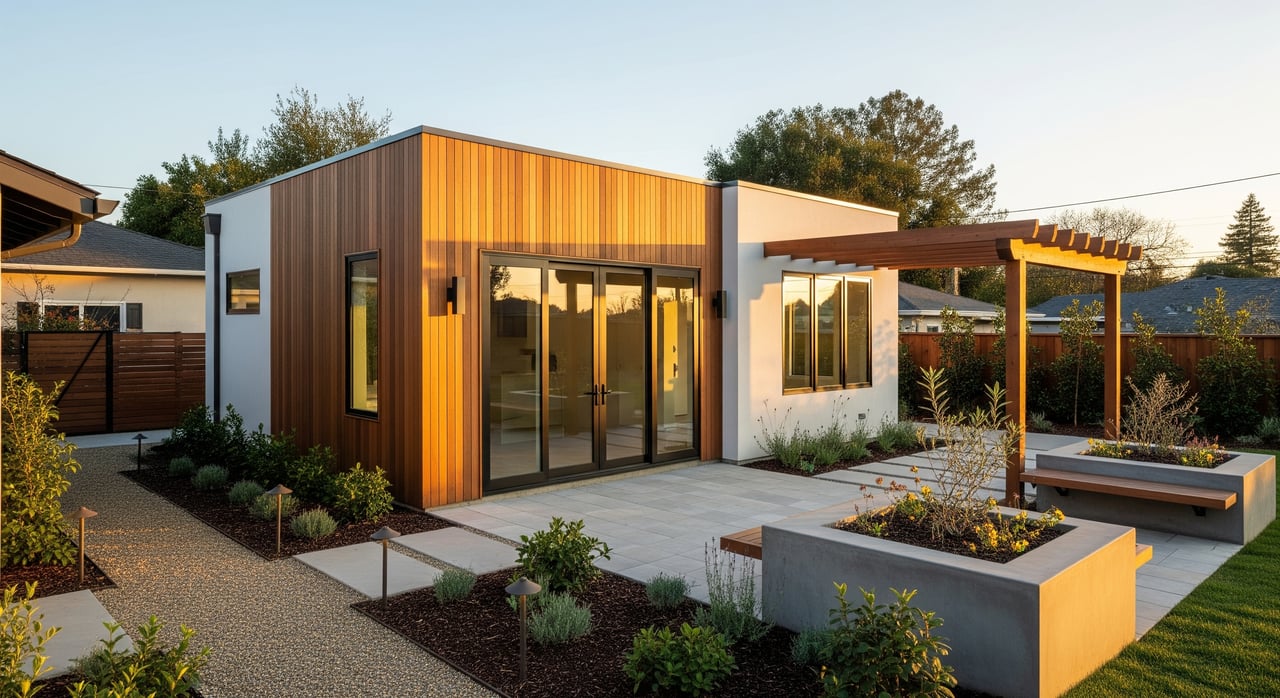
Thinking about adding an ADU to your Los Altos home? You are not alone. Many homeowners want extra space for family, flexible living, or long-term rental income, but the rules can feel complex. This guide breaks down how ADUs work in California, what to double-check for Los Altos, and the steps and timelines to expect so you can plan with confidence. Let’s dive in.
ADU basics in California
California law strongly supports ADUs and JADUs. Many applications are reviewed ministerially, which means the city uses objective standards rather than discretionary hearings. This approach is designed to simplify approvals and shorten timelines.
State guidance often references a maximum size of up to 1,200 square feet for many detached ADUs and up to 500 square feet for JADUs. These are common baseline figures. Local rules must still be confirmed, since each city can set objective standards that fit within state law.
Parking rules are also shaped by state law. In many situations, jurisdictions cannot require parking for an ADU, such as when the property is within a half-mile of transit or when the ADU is created from existing space. Where parking is allowed, cities typically require no more than one space per ADU and may allow tandem parking. Always verify how Los Altos applies these statewide provisions.
Where ADUs are allowed in Los Altos
ADUs and JADUs are commonly allowed in single-family and often in multifamily zones. The exact allowances, including any overlays like historic districts, come from the Los Altos zoning map and municipal code. Before you move forward, confirm your property’s zoning and any overlay rules.
If you are buying with ADU potential in mind, ask the seller for any existing permits or plans and check for private covenants or HOA rules that could affect your project. Private rules can limit ADUs even when the city allows them.
Size, height, and setbacks
State law sets a supportive baseline, but you will need to confirm Los Altos’s current maximum floor area, height, and setback standards for detached and attached ADUs, plus JADUs. Some cities use fixed size caps, while others use a percentage of the primary residence or lot-based formulas. Objective design standards may also apply.
Pay close attention to how ADUs count toward lot coverage or floor area ratio. This can influence where your ADU can sit on the lot and how tall it can be. If your lot is irregular or has existing accessory structures, a quick feasibility check with the city can save time later.
Parking rules to know
Parking is one of the most common questions. Under state law, cities generally cannot require parking for an ADU in several scenarios, including when you are within a half-mile of transit or when the ADU is created from existing space. When parking is required, local rules often cap it at one space per ADU and may allow tandem parking.
If you are considering a garage conversion, ask the city whether replacement parking is required. Some cities do not require replacement parking when converting an existing garage, but you should confirm the current Los Altos standard before planning your layout.
Permits and realistic timelines
Most ADU projects go through a ministerial review under objective standards. A common state benchmark is that cities act on complete ministerial applications within about 60 days. Real projects can still take longer if plans are incomplete, if utilities need upgrades, or if extra reviews are triggered.
Here is a typical sequence:
- Pre-application consultation with Los Altos Planning is recommended.
- Prepare plans and documents, including a site plan, floor plans, elevations, and basic utility information.
- Submit your application and respond to completeness checks.
- City plan review by planning, building, public works, fire, and utilities.
- Permit issuance after conditions and fees are satisfied.
- Construction with inspections and final approval.
A realistic calendar:
- Pre-application and design: 2 to 8 weeks.
- Plan preparation and engineering: 2 to 10 weeks.
- City plan check for a ministerial project: 4 to 12 weeks, with 60 days as a common benchmark.
- Permit issuance after comments are cleared: 1 to 4 weeks.
- Construction: 6 to 12 weeks for small conversions; 4 to 9 months for detached new builds.
Overall, expect 3 to 12+ months from idea to completion, depending on scope and complexity.
Fees, utilities, and fire safety
Expect permit fees, plan check fees, and potential utility connection fees. State law guides how fees are applied and requires proportionality in many cases. Some jurisdictions reduce or waive certain impact fees for smaller ADUs, often under 750 square feet. Ask Los Altos for the current fee schedule and whether any reductions apply.
Utility coordination is a key step. Confirm whether a separate sewer connection or water meter is required and whether capacity upgrades are needed. Electrical service may also need an upgrade depending on load.
Fire and life-safety will follow building code. Plan for proper egress, smoke and carbon monoxide alarms, and clear access. Ask whether sprinklers are required for your specific project.
Design review and objective standards
Cities can apply objective design standards to ADUs, such as material quality, window placement, or roof form, as long as they are not discretionary. Your ADU may need to be compatible with the primary home’s appearance within those objective guidelines. This keeps the review ministerial and helps you avoid hearings that can add time.
If your property is in a historic area or has unique site constraints, ask the city early about any added steps. Objective standards are meant to be predictable, so getting clarity up front helps your architect draw to the rules.
How ADUs affect value and resale
ADUs can improve your home’s versatility and potential rental income, which often supports resale value. In strong markets like Los Altos, buyers appreciate flexible space for multigenerational living, guests, or long-term tenants. Quality of construction and how well the unit integrates with the main home matter.
Adding an ADU typically increases your assessed value based on the improvement. For tax questions, contact the Santa Clara County Assessor for current practices and what to expect.
Renting and occupancy rules
State law permits ADUs to be rented, but local rules can include minimum lease terms or registration. Short-term rental rules vary by city, and some places limit or prohibit short stays in ADUs. Confirm the current Los Altos approach before you advertise or sign a lease.
Owner-occupancy requirements for new ADUs have largely been removed by state law, but check whether any specific occupancy rules apply to your unit type. JADUs and certain circumstances may have different conditions.
Buyer checklist for ADU potential
- Confirm the zoning for the property and whether ADUs are allowed on the lot.
- Review the lot layout, location of the garage, and space for setbacks.
- Ask for as-built plans, permits, and any recorded covenants or HOA rules.
- Ask the city about current size limits, setbacks, and parking rules for ADUs and JADUs.
- Verify water, sewer, and power capacity and whether separate meters are needed.
- Discuss future taxes with the Santa Clara County Assessor.
Homeowner steps to start an ADU
- Hire a designer or architect for a quick feasibility sketch and site plan.
- Build a budget that includes design, permits, utilities, construction, and a contingency.
- Ask Los Altos for current fee schedules and estimated plan-check timelines.
- Confirm whether your project is ministerial and what objective standards apply.
- Check HOA and CC&Rs and obtain written approvals if required.
- Speak with your lender and insurance provider about financing and coverage.
Common pitfalls to avoid
- Assuming state law overrides your HOA or CC&Rs. Private rules can still restrict ADUs.
- Skipping early utility checks. Service upgrades and connection fees add time and cost.
- Ignoring design or historic triggers. These can shift ministerial reviews into longer processes.
- Underestimating timelines. Plan time for plan check comments and multiple inspections.
- Guessing on parking rules. Confirm whether garage conversions require replacement parking.
Next steps and local guidance
The best ADU projects start with clarity. Confirm your lot’s eligibility, get a simple concept plan, and ask the City of Los Altos about current standards, required fees, and ministerial processing. Speak with the Santa Clara County Assessor about tax impacts and line up contractor bids early so you can set a realistic timeline and budget.
If you want practical, local insight on how an ADU can affect resale and daily usability in Los Altos, reach out. As a design-forward, hands-on advisor, I can help you weigh layout options, market impact, and timeline tradeoffs so you can move ahead with confidence. Schedule a clarity call with Fabiane Maluchnik.
FAQs
What is an ADU and a JADU in California?
- An ADU is a separate residential unit on the same lot as a primary home, while a JADU is a smaller unit created within the walls of the existing home. State law supports ministerial approval using objective standards.
What ADU size is commonly allowed in California?
- State guidance often references up to 1,200 square feet for many detached ADUs and up to 500 square feet for JADUs, but you must confirm Los Altos’s current caps.
Do Los Altos ADUs require parking?
- State law limits when cities can require parking and often caps it at one space per ADU if required. Many exemptions apply, including proximity to transit and conversions of existing space. Confirm how Los Altos applies these rules.
How long does it take to permit an ADU in Los Altos?
- A common state benchmark for ministerial ADU reviews is about 60 days from a complete application. Full projects, from design to construction, often run 3 to 12+ months depending on scope.
Can I convert my garage to an ADU in Los Altos?
- Garage conversions are common in many cities. Ask Los Altos if replacement parking is required and what objective design and fire-safety standards apply before you finalize plans.
Will an ADU increase my property taxes in Santa Clara County?
- Adding an ADU typically increases assessed value for the improvement. For specifics on how your project would be assessed, contact the Santa Clara County Assessor.
Are short-term rentals allowed in ADUs in Los Altos?
- Short-term rental rules vary by city and may be limited for ADUs. Confirm current Los Altos policy and any registration or minimum lease requirements before renting.